
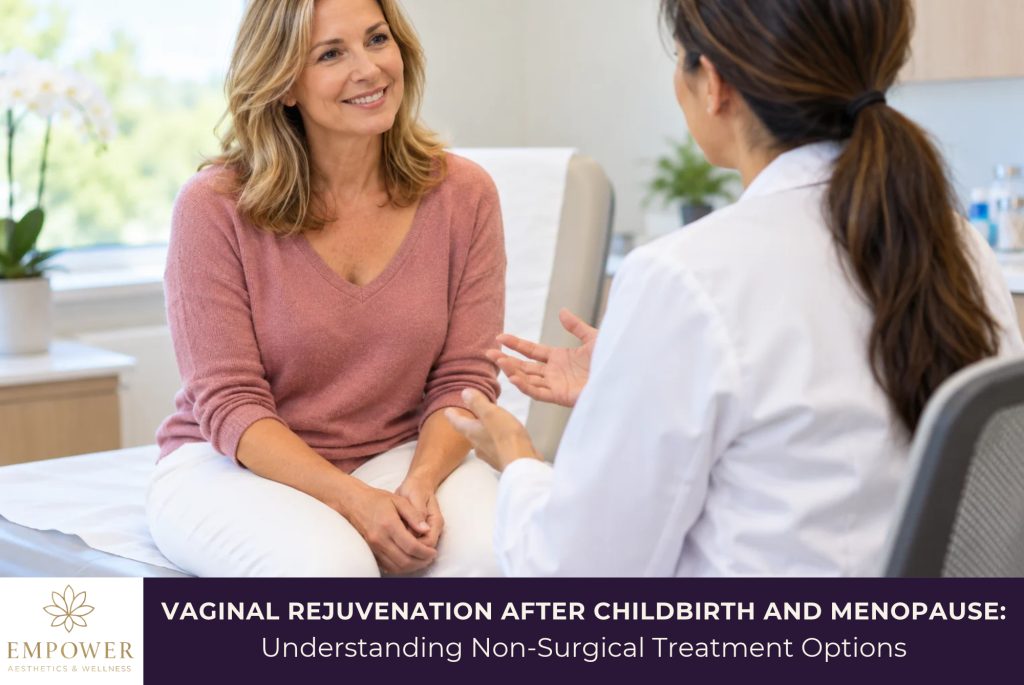
Childbirth, aging, and menopause can produce changes in vaginal and pelvic tissues. These changes may affect comfort, lubrication, urinary symptoms, and sexual well-being.
The term vaginal rejuvenation is commonly used in aesthetic marketing, but it encompasses procedures with different mechanisms and varying levels of medical evidence.
Common Changes After Childbirth
Pregnancy and vaginal delivery can affect pelvic floor muscles and connective tissues.
Some women experience pelvic heaviness, urinary leakage, or changes in vaginal sensation.
Symptoms should be evaluated rather than assumed to be normal or unavoidable.
Vaginal Changes During Menopause
Declining estrogen can contribute to vaginal dryness, irritation, and painful intercourse.
These symptoms are often part of genitourinary syndrome of menopause, or GSM.
Evidence-Based Treatment Options
Treatment depends on the underlying condition.
Options may include pelvic floor physical therapy, vaginal moisturizers, lubricants, low-dose vaginal estrogen, and selected prescription therapies.
Pelvic floor therapy may be particularly useful for muscle weakness, coordination problems, or certain urinary symptoms.
What About Energy-Based Vaginal Treatments?
Radiofrequency and laser-based devices are marketed for vaginal tightening and rejuvenation.
However, evidence supporting many cosmetic or sexual-function claims remains limited.
The FDA has warned that energy-based devices promoted for vaginal rejuvenation can cause burns, scarring, and chronic pain, and that safety and effectiveness have not been established for certain marketed indications.
Why Medical Evaluation Matters
Pain, bleeding, urinary leakage, and pelvic pressure may have different causes requiring different treatments.
An individualized evaluation helps avoid unnecessary procedures and identify appropriate medical care.
Frequently Asked Questions About Vaginal Rejuvenation
Can vaginal dryness improve without surgery?
Yes. Lubricants, moisturizers, and prescription treatments can help many patients.
Does childbirth permanently weaken the pelvic floor?
Not necessarily. Pelvic floor rehabilitation may improve function in selected patients.
Are vaginal laser treatments FDA-approved for menopause symptoms?
Energy-based devices have not been established as safe and effective for many marketed vaginal rejuvenation indications.
Can pelvic floor therapy improve bladder leakage?
Yes. Pelvic floor muscle training is a first-line treatment for many patients with stress urinary incontinence.
Should painful intercourse be evaluated?
Yes. Persistent pain deserves medical assessment to identify treatable causes.
Contact Information
Empower Aesthetics and Wellness
4981 South Arizona Ave, Suite 2 Chandler, AZ 85248
Phone: (480) 300-7350 Email: suzie@empoweraestheticsandwellness.com Website: empoweraestheticsandwellness.com Book Online: Schedule an Appointment